







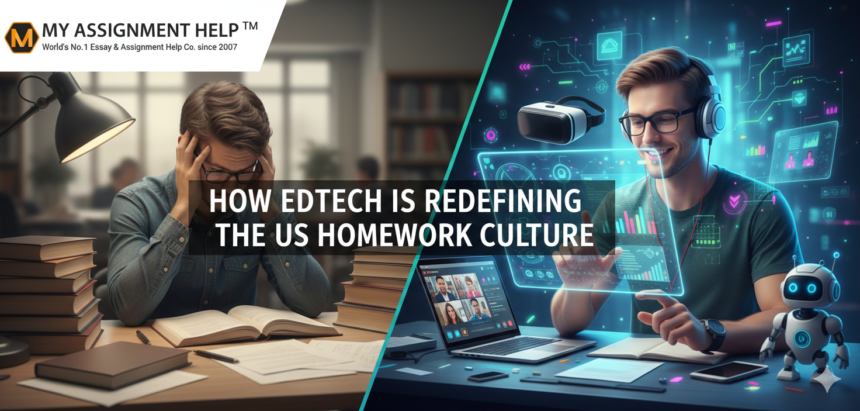
The traditional image of a US student hunched over textbooks late into the night is rapidly evolving. Driven by unprecedented advancements in educational technology (EdTech), the very nature of “homework” is undergoing a profound transformation. This isn’t just about digital textbooks; it’s about a complete paradigm shift in how students learn, collaborate, and complete assignments, ultimately reshaping academic success in America.
The Digital Revolution in US Classrooms: More Than Just Tablets
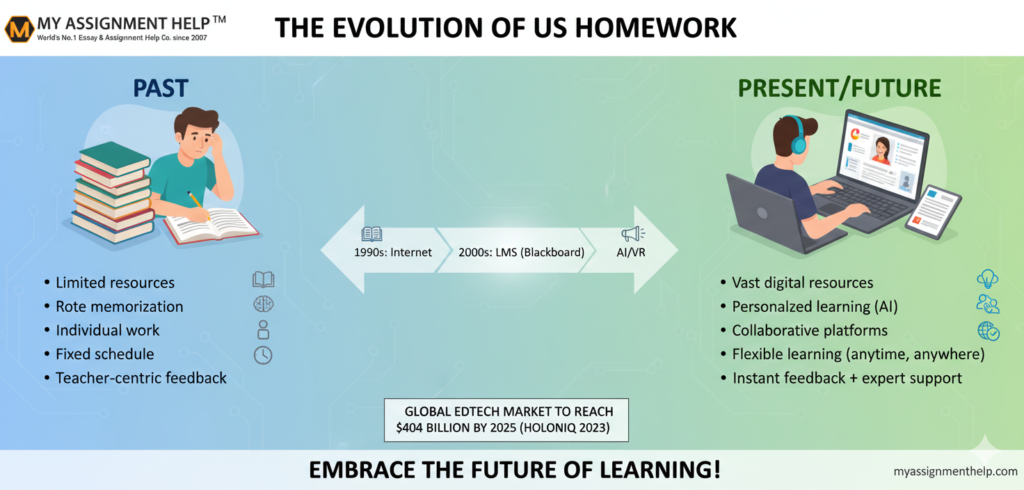
For decades, homework was a fairly standardized affair: textbooks, worksheets, and perhaps a library visit. Today, EdTech has exploded, moving far beyond basic computer labs. We’re seeing AI-powered tutoring systems, virtual reality field trips, collaborative online platforms, and data analytics that personalize learning paths. This rapid integration means homework isn’t just a reinforcement of classroom learning; it’s an extension of a dynamic, digital educational ecosystem.
According to a 2023 report by HolonIQ, the global EdTech market is projected to reach $404 billion by 2025, with significant growth driven by North America. This investment isn’t just in hardware; it’s in sophisticated software and platforms designed to enhance engagement, offer personalized feedback, and provide access to vast knowledge bases previously unimaginable.
Personalized Learning at Scale: AI’s Role in Homework
One of the most impactful shifts EdTech brings is the move towards personalized learning. AI-driven platforms can adapt to a student’s individual pace, identify knowledge gaps, and recommend tailored resources. Imagine a math assignment that provides immediate feedback, not just on whether an answer is right or wrong, but why it’s wrong, offering mini-tutorials on specific concepts the student struggles with. Tools like Khan Academy, IXL, and McGraw-Hill’s ALEKS are pioneers in this space, using algorithms to create adaptive learning experiences.
This hyper-personalization means homework can move away from one-size-fits-all tasks. Instead, it becomes a bespoke learning journey, helping students master subjects more effectively. For complex or challenging assignments, this personalized approach can significantly boost confidence and performance. In situations where students might feel overwhelmed by the sheer volume or difficulty of their assignments, especially in advanced subjects, having access to specialized support can be invaluable. Many students find themselves asking, “Who can I trust to help me navigate these intricate projects?” and seek out platforms that allow them to do my homework with expert assistance, ensuring quality and understanding. This targeted support ensures that even the most demanding academic tasks are manageable, allowing students to focus on grasping core concepts rather than getting bogged down in procedural difficulties.
Collaboration Beyond the Classroom Walls
EdTech has shattered the geographical barriers of traditional group work. Collaborative tools like Google Workspace, Microsoft Teams for Education, and various learning management systems (LMS) such as Canvas and Blackboard allow students to work together on projects in real-time, regardless of their physical location. This fosters essential 21st-century skills like digital literacy, virtual teamwork, and cross-cultural communication.
Homework now often involves shared documents, online presentations, and virtual study groups, preparing students for a future workforce that increasingly relies on remote collaboration. This interconnectedness also extends to peer review and feedback, creating a more dynamic and interactive learning environment.
Bridging the Gap: Access and Equity in the Digital Age
While EdTech promises immense benefits, it also highlights existing disparities. The “digital divide” remains a concern, where students without reliable internet access or devices are left behind. However, initiatives like providing school-issued laptops, public Wi-Fi programs, and government subsidies are working to close this gap.
Furthermore, EdTech can offer unprecedented access to specialized resources and diverse perspectives. A student in rural America can now access lectures from Ivy League professors or collaborate with peers across the globe, enriching their homework experience and broadening their horizons.
The Future of Homework: Critical Thinking and Creativity
As EdTech takes on more of the rote, repetitive aspects of homework, educators are increasingly freed to assign tasks that demand higher-order thinking, creativity, and problem-solving. Instead of memorizing facts, students might be tasked with designing a sustainable city in Minecraft, programming a robot, or creating a multimedia presentation on a complex social issue.
This shift cultivates deeper engagement and prepares students not just for exams, but for real-world challenges. It emphasizes application over rote memorization, moving towards a more holistic and meaningful educational experience.
Key Takeaways
- Personalization is Key: EdTech, particularly AI, allows for tailored homework experiences that adapt to individual student needs and learning paces, moving beyond traditional one-size-fits-all assignments.
- Collaboration Goes Digital: Online platforms enable real-time group work and peer feedback, fostering essential 21st-century skills and preparing students for a globally connected workforce.
- Access and Equity are Evolving: While challenges remain, EdTech is expanding access to diverse resources and expert support, democratizing learning opportunities for US students.
- Focus on Higher-Order Thinking: With mundane tasks automated, homework is shifting towards assignments that cultivate critical thinking, creativity, and problem-solving skills.
- Strategic Support is Integrated: Platforms offering expert assistance for complex tasks are becoming a natural extension of the EdTech ecosystem, providing targeted help when students need to do my homework effectively.
FAQ Section
Q1: Is EdTech making homework easier or harder?
A1: EdTech aims to make homework more effective and personalized. While it might introduce new tools and methods, the goal is to make learning more efficient and engaging, potentially making complex tasks more manageable through targeted support.
Q2: How does AI help with homework?
A2: AI assists by providing personalized feedback, identifying learning gaps, recommending customized resources, and sometimes even offering virtual tutoring. It helps students understand why they made mistakes, not just that they did.
Q3: Are online homework services considered “cheating”?
A3: The ethical line depends on the service and how it’s used. Services that provide direct answers without explanation are generally frowned upon. However, platforms that offer expert guidance, help with understanding concepts, or support in structuring complex assignments (like MyAssignmentHelp) can be valuable learning tools, similar to tutoring, aiming to enhance comprehension and skill development. Students should always adhere to their institution’s academic integrity policies.
Q4: What about the digital divide? How are all students accessing this technology?
A4: The digital divide is a significant concern. Many schools and government programs are working to provide devices, internet access, and digital literacy training to ensure equitable access to EdTech for all students across the US.
Q5: Will traditional homework disappear entirely?
A5: Unlikely. Traditional elements may persist, but their nature will evolve. The emphasis will shift from rote tasks to assignments that leverage technology for deeper learning, critical thinking, and collaborative problem-solving. EdTech will likely complement, rather than completely replace, traditional methods.
Author Bio
Marcus Thorne is a Senior Content Strategist and lead assignment helper at MyAssignmentHelp. With over 12 years of experience in the UK EdTech sector, Marcus has witnessed the evolution from blackboards to blockchain-verified credentials. He currently leads research into student productivity and the ethical integration of AI in higher education. When he isn’t analyzing market trends, he’s a guest lecturer on digital literacy and the future of work.
References
- HolonIQ (2025): Global EdTech Market Size and 2030 Projections.
- Brookings Institution (Jan 2026): AI’s Future for Students – Risks and Rewards.
- Future Market Insights (2026): Edtech Market Value Forecast (2026-2036).
- HMH Annual Educator Survey (Oct 2025): The Impact of AI on Teacher Productivity.